

- Home
- About Us
-
Our Solution
Marketing SolutionIT solution
- Our Clients
- Our Tech
- Blogs
- Career
- Contact Us
Please fill out the form below if you have a plan or project in mind that you'd like to share with us.
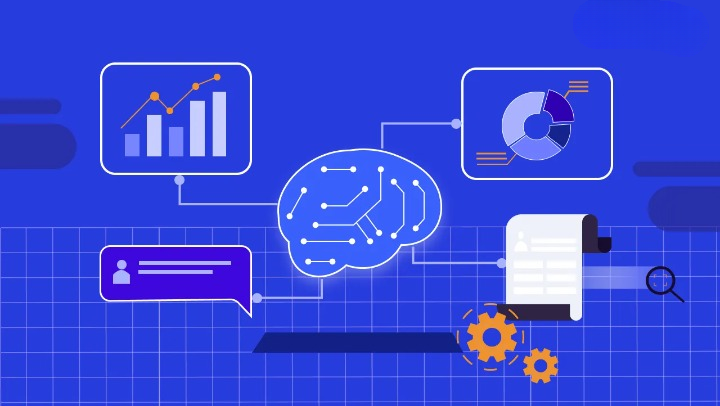
Businesses today operate in an environment where speed, accuracy, and efficiency determine success. Customers expect instant responses, employees need streamlined workflows, and leaders require real-time visibility into business operations.
Yet many organizations still rely on manual processes such as data entry, invoice approvals, spreadsheet reporting, email follow-ups, and repetitive administrative tasks. These activities consume valuable time, increase operational costs, and create opportunities for human error.
Business Process Automation (BPA) addresses these challenges by replacing repetitive manual work with intelligent, technology-driven workflows. Instead of requiring employees to perform the same tasks repeatedly, automation software executes processes automatically, consistently, and accurately.
In 2026, BPA has evolved beyond simple task automation. Artificial Intelligence (AI), Machine Learning (ML), Robotic Process Automation (RPA), cloud computing, and advanced analytics are enabling organizations to automate entire business processes—from customer onboarding and financial approvals to supply chain management and customer service.
This guide explores how Business Process Automation is transforming modern enterprises and why organizations investing in intelligent automation are gaining a significant competitive advantage.
Business Process Automation (BPA) is the use of software, AI, and digital workflows to automate repetitive business activities with minimal human intervention.
Instead of manually completing routine tasks, automated systems perform them based on predefined rules, triggers, and business logic.
Examples include:
Automation improves consistency, reduces delays, and allows employees to focus on strategic work.
Modern organizations face increasing pressure to:
Manual processes make achieving these goals difficult.
Automation enables businesses to operate faster while maintaining accuracy and consistency.
Many organizations confuse these related concepts.
Automates complete workflows across departments.
Uses software bots to mimic human actions within existing systems.
Focuses on analyzing, improving, and optimizing business processes.
Together, these technologies create highly efficient digital operations.
AI enables systems to make decisions, recognize patterns, and automate complex tasks.
Machine learning improves automation over time by learning from historical data.
Software robots automate repetitive digital tasks without changing existing systems.
OCR extracts information from invoices, forms, contracts, and scanned documents.
Workflow software coordinates tasks, approvals, notifications, and business rules.
Automation can transform nearly every department.
Businesses implementing BPA often achieve:
Automation creates a foundation for continuous improvement and innovation.
Business Process Automation supports organizations across multiple sectors.
A structured automation strategy includes:
Automation should improve processes—not simply digitize inefficient ones.
Organizations often struggle with:
Strong planning and stakeholder involvement are essential for successful implementation.
Automation will continue evolving with technologies such as:
Businesses that adopt these innovations early will improve agility and competitiveness.
At Niktech Solution, we help businesses eliminate inefficiencies through intelligent automation solutions tailored to their operations.
Our automation services include:
We build scalable, secure, and future-ready automation solutions that improve productivity while reducing operational costs.
Business Process Automation uses software and AI to automate repetitive workflows, reducing manual effort and improving operational efficiency.
High-volume, repetitive, and rule-based processes such as invoicing, approvals, customer onboarding, and report generation are excellent starting points.
Yes. Automation helps businesses of all sizes improve efficiency, reduce costs, and scale operations without significantly increasing staff.
Absolutely. Modern automation platforms integrate seamlessly with ERP, CRM, accounting software, cloud services, and third-party APIs.
AI enables automation platforms to make intelligent decisions, analyze data, process documents, recognize patterns, and continuously optimize workflows.
Business Process Automation has become a strategic necessity for organizations seeking greater efficiency, scalability, and innovation. By combining automation technologies with Artificial Intelligence and cloud platforms, businesses can eliminate repetitive tasks, improve accuracy, and empower employees to focus on higher-value activities.
As organizations continue their digital transformation journeys, intelligent automation will play an increasingly important role in driving operational excellence and long-term growth.
At Niktech Solution, we specialize in designing and implementing custom automation solutions that simplify workflows, integrate business systems, and deliver measurable results. Whether you're automating a single department or transforming enterprise-wide operations, our team is ready to help you build a smarter, more efficient future.
Manual processes slow growth.
Intelligent automation accelerates it.
At Niktech Solution, we develop AI-powered automation solutions that streamline operations, reduce costs, improve accuracy, and support sustainable business growth.
Contact Niktech Solution today for a free Business Process Automation consultation and discover how intelligent workflows can transform your organization.


