

- Home
- About Us
-
Our Solution
Marketing SolutionIT solution
- Our Clients
- Our Tech
- Blogs
- Career
- Contact Us
Please fill out the form below if you have a plan or project in mind that you'd like to share with us.
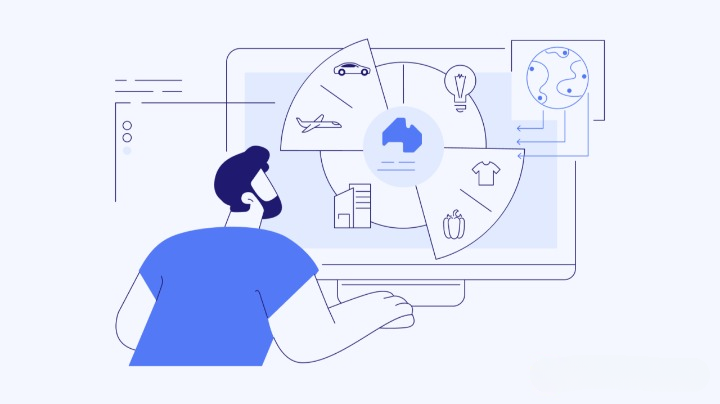
The way businesses collect, monitor, and use data has changed dramatically over the last decade. Machines, vehicles, sensors, wearable devices, cameras, and industrial equipment are now capable of communicating with one another in real time.
This interconnected ecosystem is known as the Internet of Things (IoT).
IoT enables physical devices to collect data, exchange information, and perform automated actions without constant human intervention. Combined with Artificial Intelligence (AI), cloud computing, and edge computing, IoT is helping organizations improve operational efficiency, reduce costs, enhance customer experiences, and make faster, data-driven decisions.
From smart factories and connected hospitals to intelligent logistics and smart retail stores, IoT is becoming an essential part of digital transformation strategies across industries.
This guide explores IoT technology, how it works, its business benefits, implementation strategies, security challenges, and the trends shaping connected enterprises in 2026.
The Internet of Things (IoT) refers to a network of physical devices embedded with sensors, software, processors, and communication technologies that allow them to collect and exchange data over the internet.
These connected devices can monitor environments, automate processes, and communicate with other systems in real time.
Examples include:
IoT creates a continuous flow of information that organizations can use to improve decision-making and automate operations.
A typical IoT ecosystem consists of four key stages:
A complete IoT solution includes:
These components work together to create intelligent and connected ecosystems.
Organizations implementing IoT often achieve:
Track assets, equipment, and operations continuously.
Detect potential equipment failures before they occur, reducing downtime and maintenance costs.
Automate repetitive tasks and optimize workflows using real-time data.
Deliver personalized and responsive services through connected products and applications.
Reduce energy consumption, maintenance expenses, and manual processes.
Access accurate, real-time information to improve strategic planning and business performance.
As more devices become connected, security becomes increasingly important.
Key considerations include:
A security-first approach helps protect connected ecosystems from cyber threats.
A successful IoT project typically follows these steps:
AI enhances IoT by enabling systems to:
Together, AI and IoT create smarter, more autonomous business operations.
The future of IoT includes:
These innovations will continue transforming industries and creating new business opportunities.
At Niktech Solution, we design and develop intelligent IoT solutions that connect devices, automate operations, and deliver actionable insights.
Our IoT services include:
We build scalable, secure, and future-ready IoT ecosystems tailored to your business needs.
The Internet of Things (IoT) is a network of connected devices that collect, share, and analyze data to automate processes and improve decision-making.
IoT helps organizations improve efficiency, reduce costs, monitor assets in real time, automate operations, and gain valuable business insights.
Yes, when implemented with strong security measures such as encryption, authentication, secure firmware updates, and continuous monitoring.
Manufacturing, healthcare, logistics, agriculture, retail, energy, education, and smart cities all use IoT solutions to improve operations and customer experiences.
Yes. We provide end-to-end IoT development, device integration, cloud connectivity, analytics, and support tailored to your business goals.
The Internet of Things is transforming how businesses operate by connecting physical devices with intelligent software and real-time analytics. From predictive maintenance and asset tracking to smart healthcare and connected cities, IoT is enabling organizations to become more efficient, responsive, and data-driven.
As AI, cloud computing, and 5G continue to evolve, IoT will play an even greater role in driving digital transformation across industries.
At Niktech Solution, we help businesses harness the power of IoT with secure, scalable, and innovative solutions that deliver measurable results. Whether you're starting your first IoT project or expanding an existing connected ecosystem, our experts are ready to help you build the future.
The future belongs to connected businesses.
At Niktech Solution, we develop intelligent IoT solutions that help organizations automate operations, improve efficiency, and unlock the full value of real-time data.
Contact Niktech Solution today for a free IoT consultation and discover how connected technology can transform your business.


