

- Home
- About Us
-
Our Solution
Marketing SolutionIT solution
- Our Clients
- Our Tech
- Blogs
- Career
- Contact Us
Please fill out the form below if you have a plan or project in mind that you'd like to share with us.
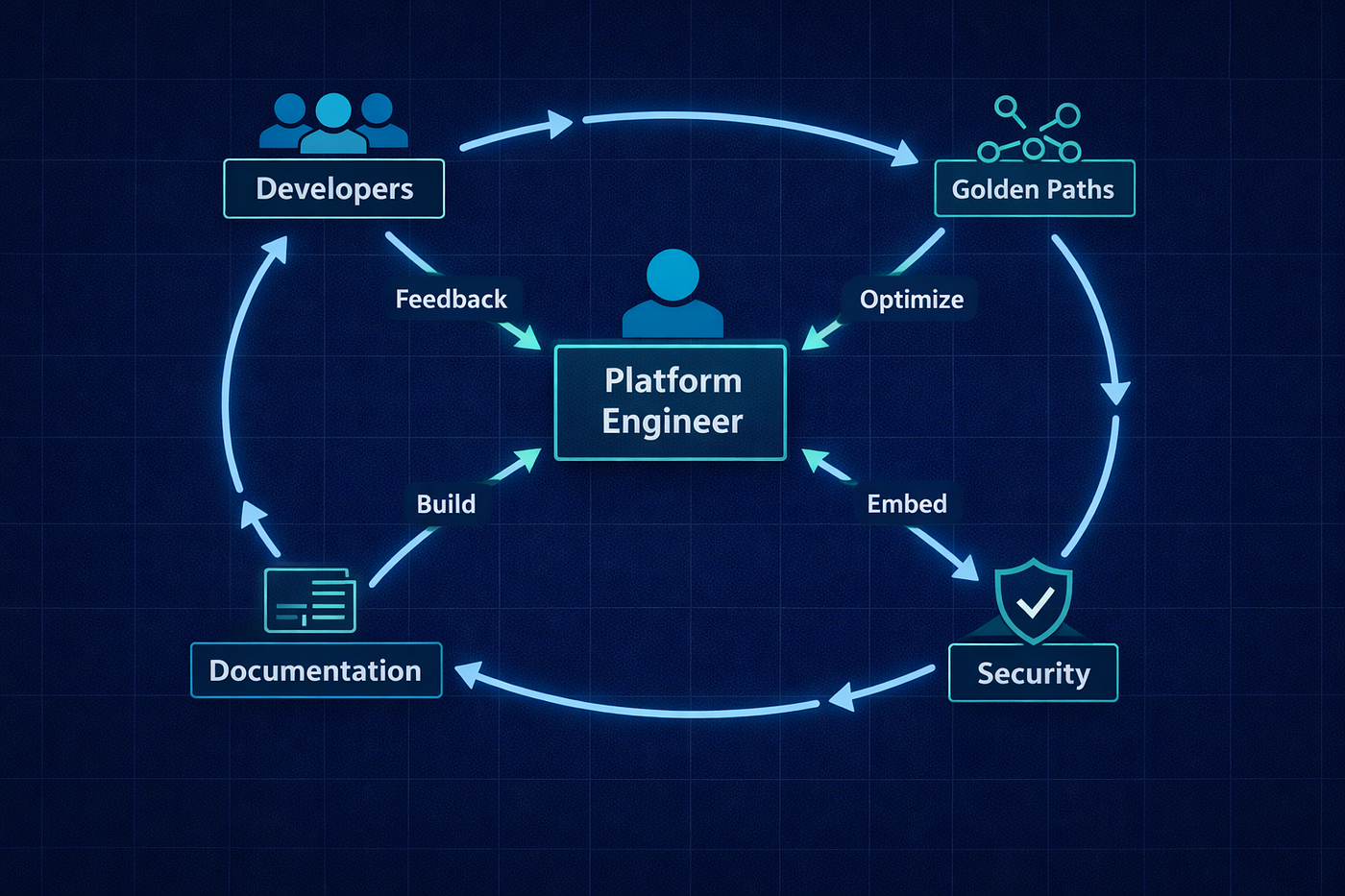
Modern software development has become increasingly complex. Development teams manage cloud infrastructure, Kubernetes clusters, CI/CD pipelines, security policies, monitoring tools, and deployment environments—all while delivering new features faster than ever.
To reduce this complexity, organizations are embracing Platform Engineering.
Platform Engineering focuses on creating Internal Developer Platforms (IDPs) that provide developers with standardized tools, automated workflows, and self-service infrastructure. Instead of repeatedly configuring environments, developers can focus on writing code while the platform handles deployment, security, scalability, and operations.
In 2026, Platform Engineering is becoming a key strategy for enterprises adopting cloud-native architectures, microservices, DevOps, and AI-powered software development. It improves developer productivity, enhances software quality, and accelerates digital transformation initiatives.
This guide explores Platform Engineering, its business benefits, architecture, implementation process, challenges, and why it is shaping the future of enterprise software development.
Platform Engineering is the practice of designing and maintaining reusable platforms that simplify software development, deployment, and operations.
An Internal Developer Platform provides developers with:
The goal is to reduce operational complexity while enabling faster and more reliable software delivery.
| Platform Engineering | DevOps |
|---|---|
| Builds internal platforms | Focuses on collaboration between development and operations |
| Creates reusable tools | Implements development workflows |
| Standardizes infrastructure | Automates deployments |
| Improves developer experience | Improves software delivery |
| Supports multiple teams | Supports project-specific processes |
Platform Engineering complements DevOps by providing a consistent foundation for development teams.
A modern platform typically includes:
Organizations implementing Platform Engineering achieve:
Standardize deployments and manage multi-tenant cloud environments.
Ensure secure, compliant, and automated software delivery.
Deploy scalable applications while meeting regulatory requirements.
Support high-traffic applications with reliable infrastructure.
Power IoT platforms and industrial software systems.
Simplify internal application development across multiple teams.
Artificial Intelligence enhances Platform Engineering by enabling:
AI makes developer platforms more efficient and proactive.
Businesses should consider:
A phased implementation strategy helps organizations maximize adoption and long-term success.
Platform Engineering is evolving with:
At Niktech Solution, we help organizations build scalable developer platforms that accelerate software delivery and improve operational efficiency.
Our services include:
We create secure, cloud-native platforms that empower development teams to innovate faster.
Platform Engineering involves building internal platforms that provide developers with self-service tools, automated infrastructure, and standardized deployment processes.
DevOps focuses on collaboration and automation, while Platform Engineering builds reusable platforms that simplify development for multiple teams.
It improves developer productivity, accelerates software delivery, reduces operational complexity, and enhances scalability.
Enterprises in finance, healthcare, retail, manufacturing, SaaS, and technology benefit significantly from adopting Platform Engineering practices.
Yes. We provide consulting, cloud infrastructure automation, DevOps services, Kubernetes management, CI/CD implementation, and ongoing platform optimization.
As software systems become more distributed and cloud-native, organizations need better ways to manage complexity while delivering applications faster. Platform Engineering provides a standardized, scalable foundation that empowers developers, improves software quality, and accelerates innovation.
By investing in Internal Developer Platforms, businesses can streamline operations, strengthen security, and create a better developer experience that supports long-term growth.
At Niktech Solution, we help organizations design and implement modern Platform Engineering solutions that drive efficiency, scalability, and digital transformation.
Build a modern engineering platform that empowers your development teams and supports rapid business growth.
Partner with Niktech Solution for Platform Engineering, DevOps, cloud-native architecture, and enterprise software solutions tailored to your organization's needs.
Contact Niktech Solution today for a free consultation and build the foundation for faster, smarter software development.


